

Stay Safe on Hickory Roads: Tire Pressure Insights You Need

May 20th, 2026 by


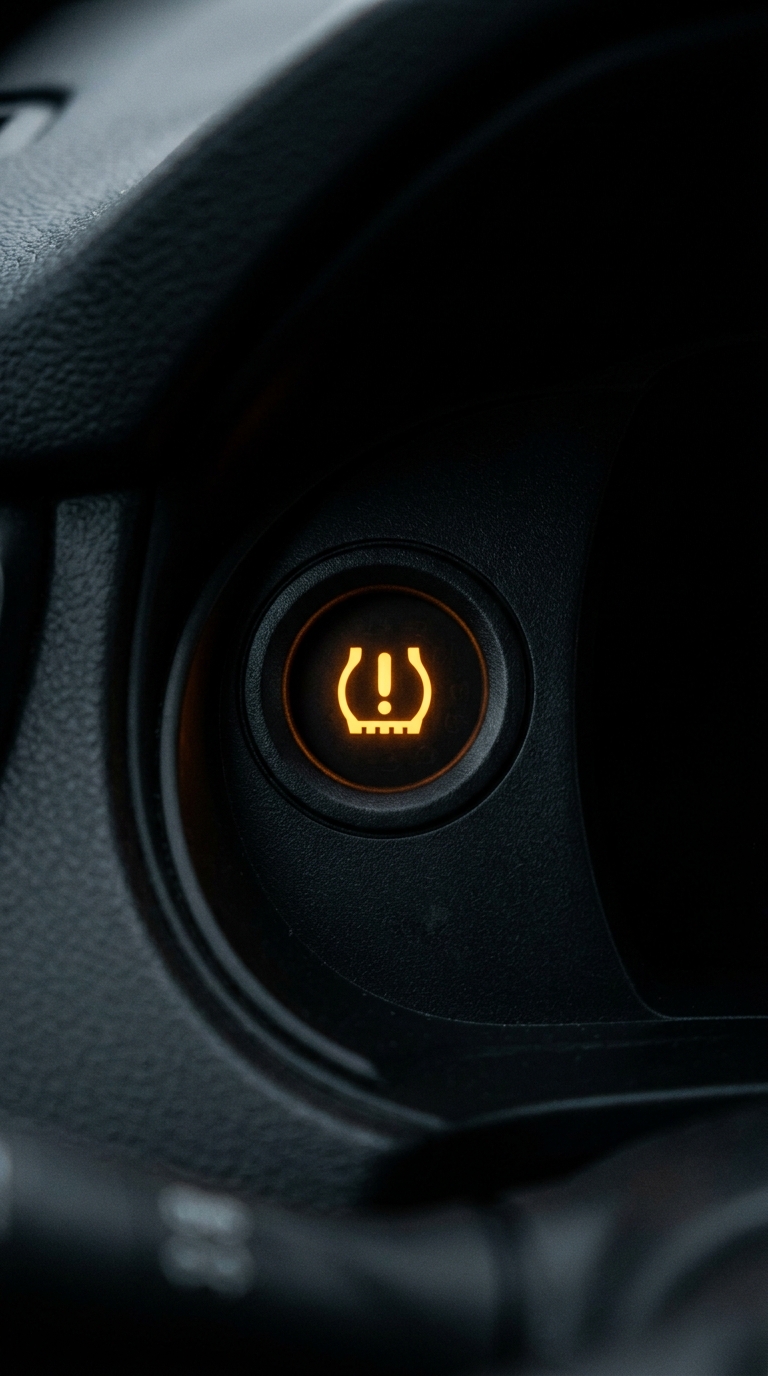
You’re cruising down Highway 70 SE in Hickory when that familiar orange horseshoe-shaped light flickers on your dashboard. Your heart sinks slightly as you realize your tire pressure is low. The question immediately arises: Is it safe to continue driving, or should you pull over immediately? At Modern Nissan of Hickory, we believe that understanding the nuances of tire health is fundamental to driver safety. Driving with low tire pressure isn’t just a minor inconvenience; it is a significant safety risk that compromises your vehicle’s performance, slashes your fuel economy, and drastically shortens the lifespan of your tires.

There is a critical distinction between ‘low’ and ‘dangerously low’ pressure. While a drop of a few PSI (pounds per square inch) might only trigger a warning light, driving on tires that are significantly under-inflated creates a cascade of mechanical failures. This article serves as your comprehensive guide to navigating these risks, ensuring you have the knowledge to protect yourself and your passengers on North Carolina roads. We will explore the physics of inflation, the immediate handling risks, and why visiting our service center at Modern Nissan of Hickory is often the smartest move you can make for your peace of mind.
 

cpo-1

Understanding the Physics: Why PSI Matters


To understand why tire pressure is so vital, you have to look at the physics of how a tire functions. Contrary to popular belief, it isn’t the rubber itself that supports the weight of your Nissan; it is the air pressure inside. When PSI drops, the tire loses its structural integrity. This causes the sidewalls to flex more than they were designed to, shifting the load-bearing responsibility to the rubber and internal steel belts. This excessive flexing generates immense internal heat, which is the primary enemy of tire longevity.

When your tires are under-inflated, the ‘contact patch’—the portion of the tire actually touching the pavement—distorts. Instead of a uniform, rectangular shape, the tire flattens out, putting more pressure on the outer edges (shoulders) and less on the center. This uneven distribution leads to erratic handling and accelerated wear.


Every Nissan vehicle has a specific ‘recommended PSI’ meticulously calculated by engineers to balance comfort, safety, and efficiency. You won’t find this number on the tire itself (that is the maximum pressure), but rather on the driver-side door jamb placard. Maintaining this exact number ensures that your suspension can work in harmony with your tires.

In Hickory, where seasonal temperature shifts can cause air to expand and contract, keeping an eye on this number is a year-round responsibility. If you’re unsure if your current vehicle is up to the task of modern safety standards, you can always browse the new vehicles for sale at Modern Nissan of Hickory to see how the latest TPMS technology keeps drivers informed in real-time.


Immediate Risks: Handling and Braking


Driving with low pressure immediately compromises your vehicle’s primary safety systems: steering and braking. When a tire is soft, its response to steering inputs becomes ‘mushy’ and delayed. In an emergency maneuver—such as swerving to avoid a hazard on US-70—the delay between your steering wheel movement and the tire’s reaction can be the difference between safety and an accident.

Data indicates that under-inflated tires can increase stopping distances by as much as 25% on wet surfaces. Because the contact patch is distorted, the tire cannot effectively channel water away, increasing the risk of hydroplaning. Furthermore, in cornering, the sidewall of a low-pressure tire can ‘roll’ under the rim, leading to a sudden loss of traction. If you feel your vehicle pulling to one side, it’s often a sign that one tire has significantly lower pressure than the others.


0232bc1d1c2dfa6f85e639e6fb3d1a99

The Threat of a Blowout


The most catastrophic result of low tire pressure is a high-speed blowout. As we discussed, low pressure leads to excessive sidewall flexing. This flexing isn’t just a physical movement; it’s a generator of extreme thermal energy. Eventually, the heat becomes so intense that the chemical bonds in the rubber begin to break down, and the internal fabric and steel cords separate from the carcass of the tire.

This structural failure usually happens without much warning. At highway speeds, a sudden blowout can cause an immediate loss of control, potentially leading to a rollover or collision. This is why we urge Hickory drivers never to ignore a TPMS light. If you suspect your tires are aging or damaged, please reach out to our parts center at Modern Nissan of Hickory to discuss replacement options before a failure occurs.


Long-Term Consequences for Your Vehicle

Reduced Fuel Economy


Under-inflated tires have higher rolling resistance. This means your engine has to work significantly harder to move the vehicle, leading to a noticeable drop in MPG. Over a year of commuting in Hickory, this can cost you hundreds of dollars in extra fuel.


Premature Tread Wear


Low pressure causes the outer edges of the tire to wear down much faster than the center. This ‘cupping’ or shoulder wear can ruin a brand-new set of tires in just a few months, forcing an expensive replacement far sooner than expected.


Suspension Strain


Tires act as the first line of defense for your suspension. When they are under-inflated, they can’t absorb road shocks properly. This transfers the energy directly into your shocks, struts, and bushings, leading to premature mechanical failure.


Deciphering the TPMS Warning Light


Your Tire Pressure Monitoring System (TPMS) is a sophisticated safety feature designed to alert you before a situation becomes dangerous. However, the light can mean different things depending on how it behaves:

1. Solid Light: This typically means one or more of your tires has dropped at least 25% below the recommended pressure. You should check your levels as soon as possible.
2. Flashing Light: A light that flashes for 60 to 90 seconds upon startup and then remains solid usually indicates a malfunction in the TPMS system itself—likely a dead sensor battery or a signal interference.
3. Cold Weather Drops: In Hickory, a sudden cold snap can cause the air inside your tires to contract, dropping the pressure just enough to trigger the light. This is often ‘temporary’ but still requires a top-off to maintain safety.


AI generated: only thing in the image is a tpms warning light for a nissan

Expert Inspection at Modern Nissan of Hickory


When it comes to your safety, guesswork isn’t enough. Our factory-trained technicians at Modern Nissan of Hickory use precision equipment to diagnose tire issues that the average gas station gauge might miss. Whether it’s a slow leak from a microscopic nail puncture, a failing valve stem, or rim corrosion preventing a proper seal, we have the expertise to fix it right the first time. We don’t just add air; we ensure your entire wheel assembly is road-worthy for the unique driving conditions we face here in North Carolina. Don’t leave your safety to chance—visit us today.


How to Properly Check and Adjust Pressure

 

Checking your tire pressure is a simple skill that every driver should master. Here is the professional way to do it:

Check when ‘Cold’: Always check pressure before you have driven more than a mile. Driving generates heat, which increases air pressure and gives an artificially high reading.
Use a Reliable Gauge: Don’t rely on the gauges built into gas station air hoses; they are often abused and inaccurate. Invest in a high-quality digital or dial gauge.
Find Your Number: Check the driver’s side door jamb for the specific PSI for your front and rear tires (they are sometimes different!).
Avoid Over-inflation: If you over-fill, use the small nipple on the back of the tire gauge to release air until you hit the target number. Over-inflation can be just as dangerous as under-inflation, leading to a harsh ride and center-tread wear.


5040e6aa9766e3d24000b481db2b714d

Common Causes of Pressure Loss

Temperature Changes


The ’10-degree rule’ states that for every 10-degree drop in temperature, your tires lose approximately 1 PSI. This is why TPMS lights are so common during Hickory’s autumn and winter mornings.


Road Hazards


Potholes, curb strikes, and debris like nails can cause immediate or slow leaks. Even if the tire looks ‘fine,’ the internal structure could be compromised by a hard impact.


Natural Permeation


Tires are naturally porous. Even a perfectly healthy tire will lose about 1 to 1.5 PSI per month simply through osmosis. This is why monthly checks are non-negotiable for safe driving.


When a Top-Off Isn’t Enough: Replacing Your Tires
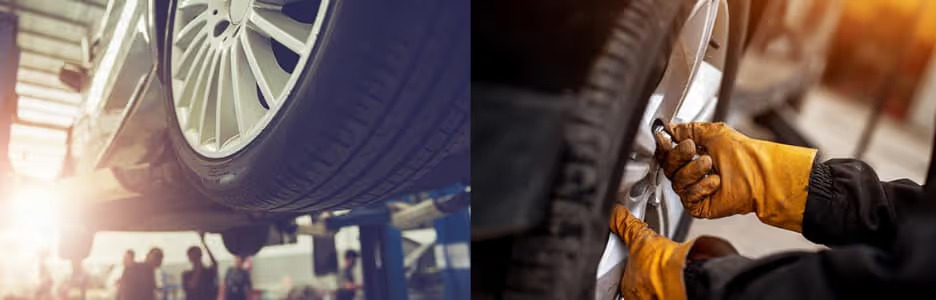
 

Sometimes, adding air is just a temporary fix for a deeper problem. If you find yourself filling up your tires every week, you likely have a puncture or a failing bead seal. Furthermore, if your tread depth is below 2/32 of an inch, the tire can no longer provide adequate grip, regardless of its pressure.

At Modern Nissan of Hickory, we carry a full stock of Nissan-approved tires specifically designed for your vehicle’s weight and performance specs. From all-season commuters to high-performance rubber, our parts center at Modern Nissan of Hickory can help you find the perfect match. If you’re considering a new set of tires, you might also want to trade in your vehicle at Modern Nissan of Hickory and upgrade to a newer model with advanced safety tech.


Tires-Banner

The Modern Nissan Safety Advantage


The team at Modern Nissan of Hickory would like to welcome you to our dealership in Hickory, where we’re confident you’ll find the vehicles you’re looking for at a price you can afford. Experience the MODERN Difference with our SmartBuy Pre-Owned Vehicles, where “Confidence Comes Standard”. This means our vehicles are inspected, reconditioned, and come with a CARFAX history report. We even offer a 3-Day/300 Mile Vehicle Exchange Program and complimentary NC State Inspections for life! Whether you are looking for a new Nissan or a high-quality used car, our focus on tire safety and overall vehicle health ensures you drive away with total peace of mind.


Frequently Asked Questions


Can I drive 50 miles on low pressure?
It is not recommended. While you might physically be able to, the heat buildup over 50 miles can cause permanent internal damage to the tire’s structure, even if it doesn’t blow out immediately.


Does low pressure affect AWD systems?
Yes. Nissan Intelligent AWD systems rely on precise tire diameter readings. An under-inflated tire has a smaller rolling circumference, which can confuse the system and cause mechanical strain on the drivetrain.


Will insurance cover a blowout?
If the blowout was caused by hitting a hazard, it’s often covered. However, if the blowout is proven to be caused by long-term neglect of tire pressure, some carriers may deny the claim due to maintenance failure.


Upgrade Your Ride for Better Safety


If you find yourself constantly battling tire issues or TPMS warnings, it might be a sign that your current vehicle is reaching the end of its reliable lifespan. Modern Nissan vehicles feature advanced Easy-Fill Tire Alert systems that honk the horn when you reach the correct pressure—no gauge required! Explore our used vehiclesor talk to our finance team about a competitive lease on a new model. We make the transition easy and stress-free.


Summary Checklist for Tire Safety


Keep this quick-reference guide in mind to ensure you’re never caught off guard:

* Monthly Checks: Use your own gauge to check all four tires (and the spare!) every 30 days.
* Inspect for Damage: Look for bubbles in the sidewall, embedded nails, or uneven wear patterns.
* Respect the Light: If the TPMS light comes on, don’t wait. Stop at the next safe location to inspect your tires.
* Professional Help: If a tire keeps losing air, visit Modern Nissan of Hickory immediately for a professional repair.
* Alignment Matters: If your car pulls to one side, it may be an alignment issue causing uneven tire pressure and wear.


Drive Safely in Hickory – Schedule Your Tire Service Today


Your safety is our top priority. Don’t let a simple tire pressure issue turn into a dangerous road emergency. The expert team at Modern Nissan of Hickory is here to help you maintain your vehicle to the highest standards. Whether you need a simple pressure adjustment, a professional patch, or a completely new set of tires, we have the tools and the talent to get you back on the road with confidence.

Get Directions to Modern Nissan of Hickory and visit us at 840 Us Hwy, 70 SE, Hickory, NC 28602. If you have immediate questions about your tire health, please call us at (828) 324-5040. We look forward to serving you!


Posted in Nissan Service